Why Northwest Georgia Red Clay Ruins Foundations (And How to Fix It With Yard Drainage)
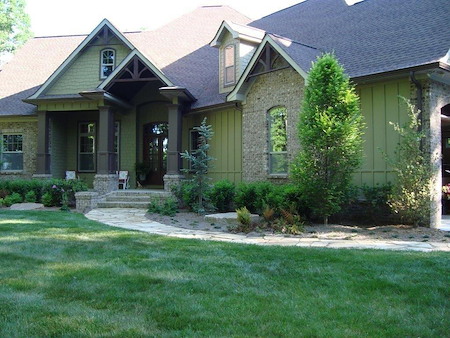
Northwest Georgia’s red clay is dense, fine, and sticky. When summer storms hit Calhoun, water can’t soak in fast. It piles up underground and pushes against your crawlspace or slab. That hidden force is hydrostatic pressure, and it is the reason a real plan for yard drainage beats quick fixes every time. If you are ready to protect your home, our team handles irrigation systems and drainage designed for local soil and weather.
Red Clay In Northwest Georgia: Why It Acts Like An Underground Dam
Clay particles are tiny and pack tight. In Calhoun’s red clay, the voids between particles are so small that water moves slowly. After a downpour, that saturated layer forms a barrier right where your foundation meets native soil. Think of it like a rubber plug under the surface. Water has nowhere to go, so it presses on concrete and seeps toward crawlspace walls.
That is why red clay behaves like an underground dam. Even if the top of your yard looks dry a day later, the soil right at footing depth can still be saturated. Over time, that pressure exploits hairline cracks, wicks into masonry, and leaves wood framing in crawlspaces damp and musty.
How Hydrostatic Pressure Attacks Calhoun Foundations
Hydrostatic pressure rises with depth and water volume. During fast, heavy storms common along the I‑75 corridor, runoff reaches low sides of homes and fences first. On lots built on compacted pads, the problem is worse because construction compaction left clay even tighter than the native subsoil.
- Persistent damp spots along crawlspace vents or sill plates
- Musty odors or efflorescence marks on block walls
- Soil pulling away from foundations as wet clay shrinks later
- Settling near patios and steps where water collects
These are signals that water is being trapped against your structure instead of moving away from it.
Designing A Multi-Tier Yard Drainage Defense For Calhoun, GA
A single tactic rarely solves a red clay problem. The most reliable approach layers surface grading with subsurface relief and controlled discharge. Here is the proven stack our clients rely on from Sonoraville to the neighborhoods off Red Bud Road.
Tier 1: Precision Surface Regrading
Start by shaping the surface so water never loiters by the house. In Calhoun, sudden summer downpours demand math, not eyeballing. We establish a consistent fall away from the foundation and across the lawn at a target of 1 foot of drop for every 100 feet of run wherever site limits allow. Crews verify this with levels or lasers, then smooth transitions so runoff flows without creating ruts.
Proper regrading breaks the “ponding ring” around your home. It also reduces the load on any subsurface system, which keeps pipes cleaner and outlets calmer during peak rain.
Tier 2: Deep-Trench French Drains That Stay Clear In Clay
Where groundwater still migrates under the surface, we intercept it with French drains built for Northwest Georgia soils. The trench follows the wet zone at footing-safe distance, then steps down along the yard’s natural fall. We use clean, angular stone to speed flow into a perforated pipe and specify outlets that move water to safe, legal discharge points on your lot.
The detail that makes or breaks performance in red clay is fabric. Fine clay silt will clog gravel voids if you let it. That is why our drains use a heavy-duty non-woven geotextile “burrito wrap” around the stone and pipe. The fabric filters fines while letting water pass, so the system keeps working season after season instead of silting shut after a few storms.
Tier 3: Safe, Controlled Outlets And Erosion Control
Once water is captured, it must leave the property in a controlled path. We set outlet locations to avoid washouts and use energy-dissipating stone or basins where slopes steepen. On longer runs or at fence-line lows, we blend in swales and bank stabilization so the finish looks clean and holds up to repeated storms. When slopes need extra protection, our team pairs drainage with targeted erosion control to stop soil loss.
Local insight: Calhoun’s heaviest rain often comes in short bursts. Systems that barely work in light showers can fail hard during pop-up cells. A properly wrapped drain with measured slope survives those spikes and spares your crawlspace.
Why Guesswork Fails During Calhoun Downpours
Red clay does not forgive sloppy slopes. A trench that flattens halfway across the yard becomes a bathtub. A swale that ends in a low corner turns into a pond. The fix is simple to say and careful to build: maintain a continuous fall, protect the stone from fines, and give captured water a clear exit that will not erode.
Homeowners sometimes ask if a channel drain will beat a French drain. They serve different jobs. A channel drain is a surface collector; a French drain relieves subsurface flow. Calhoun yards often need both in small doses, chosen by what the site is actually doing after rain. Our comparison of french drain vs. channel drains explains when each choice makes sense for local lots.
Where This Matters Most Around Your Home
Not every square foot needs a trench. We target the zones where red clay traps the most water. On many Calhoun properties, that means side yards that sit a foot lower than the front, back corners near fence lines, and the shaded strip behind patios where runoff slows.
- Side yards squeezed between homes, especially on streets that climb away from the Oostanaula floodplain
- Rear corners where privacy fences act like mini dams
- Mulch beds along block walls that never fully dry out
- Driveway edges that have settled and now pitch water toward garages
Each of these areas benefits from shaping the surface first, then adding targeted subsurface relief only where groundwater lingers.
Materials And Methods That Hold Up In Northwest Georgia Clay
Because clay fines are relentless, materials matter. We rely on clean, uniform stone to keep voids open and route water to the pipe. We avoid soils or mixed fill in and around the trench because they migrate. Pipe sizing is selected for site conditions, and outlets are planned so they remain accessible for checks after storms. For aesthetic finishes, we can top dress narrow surface bands with decorative rock that matches nearby beds, or return a sod cap where the grade allows.
One more must-have in red clay: heavy non-woven geotextile around the entire drain envelope. It is the filter that keeps the system breathing. Without it, fines creep in and the trench slowly becomes clay again.
Calhoun Weather: Built For Bursts, Not Just Drizzles
Pop-up cells on hot afternoons dump a lot of water in minutes. That reality shapes our designs. We check the longest water path across your yard and keep the fall steady from start to finish. Where the path crosses traffic or roots, we adjust depth and stone size so flow stays consistent. We also confirm that regraded areas are smooth enough to mow without flattening the slope you paid for.
For a deeper dive on comparing surface fixes to subsurface relief in our soil, you can skim our local guide on regrading and drains. It pairs well with the services we offer through irrigation systems and drainage when a full plan is the right call.
What To Expect When Landscape Creations, Inc. Designs Your Drainage Plan
Our process is plain and careful. First, we walk the site after a recent rain when possible. We map low areas, fence lines, patios, and where neighboring lots push water onto yours. Then we measure slopes, probe soil, and mark utility clearances before any digging begins.
Next, we sketch a multi-tier plan that shows how water leaves every problem spot. Regrading comes first to move surface water. A deep-trench French drain is added only where groundwater keeps things soggy. Outlets are located to keep discharge on your property and to resist erosion with stone energy breaks and vegetated buffers.
Finally, we restore surfaces so you can use your lawn right away. On streets near downtown Calhoun with smaller side yards, that might mean a narrow stone band that drains and looks tidy. On larger lots toward Sonoraville, it might be a buried path with a sod cap. Either way, we leave you with clear notes on where water goes and how to confirm it after the next storm.
If you want a quick primer on irrigation choices for planting beds that stay dry underfoot, browse our local take on drip irrigation for flowerbeds. And when you want a one-stop partner for yard drainage solutions in Calhoun, GA, our crews coordinate grading, drains, plantings, and stonework so the whole system works together.
Smart Details That Prevent Callbacks
Small choices extend system life in red clay. We keep trench bottoms true so pipes do not belly out. We avoid long, flat sections by stepping depth when needed to hold the fall. We use sweeping bends instead of tight fittings so silt cannot settle in corners. Outlets are placed where you can see them, not hidden under mulch. Seasonal checks are straightforward and quick.
Never route discharge where it can wash across sidewalks or onto a neighbor’s lot. Keeping water on your property and under control protects landscapes and keeps the peace after big rains.